

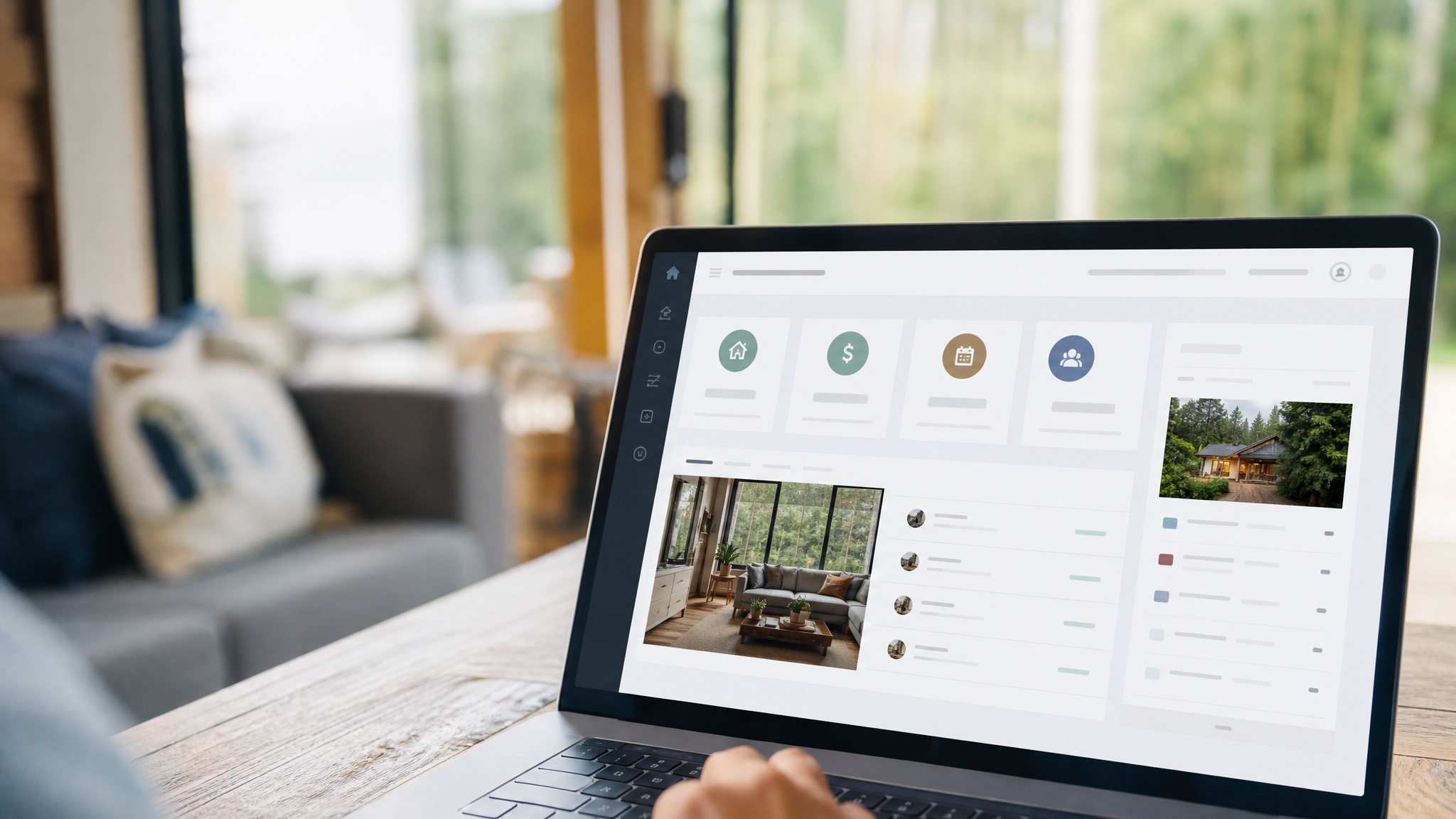
Vacation Rental Management: A Complete Guide
Short-term rentals generate serious income — but only when they're run like a business. Whether you own a beachfront condo or a mountain cabin, the difference between a thriving rental and a frustrating one often comes down to how well it's managed. This guide breaks down every layer of vacation rental management, from market research and pricing to operations, technology, and deciding whether to hire help or go it alone.
What Is Vacation Rental Property Management?
Definition and Scope
Vacation rental property management is the full-service discipline of marketing, booking, operating, and maintaining a short-term rental. It spans single-family homes, condos, cabins, and multi-unit portfolios — any property rented on a nightly or weekly basis rather than a long-term lease.
Core Responsibilities
The scope goes well beyond handing over keys. Managers handle listing creation, channel distribution, dynamic pricing, guest communication, housekeeping coordination, maintenance, and financial reporting. Done well, vacation property management protects the physical asset while continuously improving the guest experience.
Who Uses These Services
Owners can self-manage using platforms like Airbnb and Vrbo, or they can hand off operations entirely to a professional vacation management company. The right choice depends on how much time the owner wants to invest, how close they live to the property, and what income target they're chasing. The core goal stays the same regardless of model: maximize occupancy and average daily rate (ADR) without burning out guests or owners.
Business Models and Ownership Scenarios
Self-Managing vs. Hiring a Manager
Self-management puts every decision in your hands — pricing, guest screening, turnover scheduling, emergency calls at midnight. Full-service vacation home property management hands all of that to a third party in exchange for a percentage of revenue or a flat fee. Both work; the question is trade-offs.
Revenue-Share vs. Fixed-Fee
Most vacation rental management services charge between 10% and 30% of gross revenue. Lower-touch remote managers sit at the low end; full-service local companies with dedicated account teams sit at the high end. Fixed monthly fees exist too, often with pass-through costs for cleaning, maintenance, and supplies. Revenue-share aligns incentives — the manager only earns more when you do. Fixed fees offer cost predictability but can misalign interests when occupancy drops.
Co-Hosting and Hybrid Models
Co-hosting sits between DIY and full-service. A co-host handles guest messaging, check-ins, and turnover coordination while the owner manages pricing, maintenance vendors, or both. Hybrid models let owners stay involved in high-value decisions while offloading the daily grind. The right structure depends on your time, local presence, risk tolerance, and how much control you want over the asset.
Market Research and Revenue Strategy
Demand and Seasonality Analysis
Before setting a single rate, understand what drives demand in your market. Is it a ski town with two hard peaks and dead shoulder seasons? A beach market with a six-month summer? Study local events, school calendars, and corporate demand drivers. Lead times matter too — beach rentals in coastal resort towns often book 90–120 days out, while urban properties fill in under two weeks.
Competitive Benchmarking
Pull comparable listings on Airbnb, Vrbo, and Booking.com. Look at their occupancy rates, ADR, minimum stay policies, amenity sets, and review counts. Tools like AirDNA and Mashvisor aggregate this data at the market level. Understand where your property sits in the comp set before committing to a pricing strategy.
Revenue Goals and Positioning
Define your target guest before you define your rates. Families need multiple bedrooms, high chairs, and fenced yards. Remote workers want fast Wi-Fi, a dedicated desk, and blackout curtains. Pet-friendly properties can command a premium in most markets simply because supply is limited. Align your amenities to your target segment, then build a revenue calendar that captures peak-season yield without sacrificing off-peak occupancy.
Listing Optimization and Channel Distribution

Booking Platforms and Direct Site
Distributing across Airbnb, Vrbo, Booking.com, and a direct booking website diversifies demand and reduces platform dependency. Each OTA attracts a different traveler profile — Vrbo skews toward families booking entire homes; Booking.com pulls international guests; Airbnb captures a wide urban and experiential segment. A direct site cuts OTA commissions on repeat guests and gives you full control over the booking relationship.
Photography and Copywriting
Guests decide in seconds. Professional photography — wide angles, natural light, staged spaces — is non-negotiable. Equally important is copy that leads with the experience, not just the bedroom count. Titles and descriptions that incorporate terms like "vacation home rental management" and "vacation home management" in natural context also support search visibility on Google, not just OTA algorithms.
Policies, Fees, and House Rules
Clear, upfront policies prevent disputes more effectively than any deposit. Spell out cancellation terms, security deposit amounts, pet fees, extra-guest charges, and check-in/out times in plain language. Ambiguous house rules generate bad reviews; specific ones set expectations and protect your asset. Use a channel manager to sync rates, availability calendars, and policy updates across every platform simultaneously.
Dynamic Pricing and Yield Management
Tools and Tactics
Static pricing is a revenue leak. Dynamic pricing tools — PriceLabs, Wheelhouse, and Beyond are the most widely adopted — adjust nightly rates based on seasonality, local events, booking pace, and competitor movement. Set a pricing strategy, let the tool execute daily, and review it weekly rather than daily to avoid constant second-guessing.
Minimum Stays and Restrictions
Minimum stay requirements shape your calendar as much as your rates do. A seven-night minimum in peak summer captures full-week bookings but can leave shoulder-season gaps. Shorter minimums fill more nights but increase turnover costs. Orphan-night logic — automatically reducing the minimum stay when a gap of one or two nights appears between reservations — can recover significant revenue without manual intervention.
Promotions and Length-of-Stay Discounts
Last-minute discounts (triggered 7–14 days out when gaps appear), early-bird offers for peak dates, and length-of-stay discounts for 7- or 28-night stays all have a place in a mature pricing strategy. Deploy them intentionally rather than reactively. A 10% weekly discount that consistently drives 7-night bookings beats scrambling to fill a Sunday gap with a steep last-minute cut.
Operations: Housekeeping, Maintenance, and Inspections
Turnover Workflows
A property that photographs beautifully must also photograph beautifully on departure day — every single time. Standardize turnover checklists with room-by-room tasks, photo documentation requirements, and quality control steps. Apps like Properly or Breezeway let managers assign tasks, track completion with timestamped photos, and flag issues before the next guest arrives.
Linen and Inventory Control
Par-level linen systems (two or three sets per bed rotating through a laundry service) eliminate the chaos of last-minute shortfalls. Track consumable inventory — toilet paper, soap, coffee pods — and reorder automatically rather than waiting for a guest complaint. Smart inventory management is one of the highest-leverage operational improvements available to vacation home management operators.
Preventive and Emergency Maintenance
HVAC failures in August and frozen pipes in January are predictable in the sense that they happen every year somewhere. Schedule preventive maintenance for HVAC systems, water heaters, smoke and CO detectors, and pool equipment on a calendar. Maintain a vetted vendor list for emergency plumbing, electrical, and locksmith calls. Ops software that logs every work order, vendor visit, and cost creates the audit trail needed for insurance claims and owner reporting.
Guest Experience, Communication, and Reviews
Pre-Arrival to Checkout
The guest relationship starts at inquiry, not check-in. Respond within an hour to booking questions. Send a pre-arrival message 3–5 days out with access codes, parking instructions, and a welcome note. A checkout reminder the morning of departure reduces forgotten items and late checkouts. Branded, timely messaging throughout the stay signals professionalism and builds the kind of trust that earns 5-star reviews.
Digital Guides and Automation
A well-built digital guidebook — delivered via a link in your check-in message — can cut inbound support messages by 30% or more. Include Wi-Fi passwords, appliance instructions, local restaurant recommendations, emergency contacts, and house rules in plain, skimmable format. Automate the delivery of these messages using your property management system (PMS) so they go out on schedule without manual effort.
Service Recovery and Reputation
Problems happen: a broken dishwasher, a noisy neighbor, a hot tub that won't heat. How you respond matters more than the problem itself. Set internal SLAs — acknowledge within one hour, resolve within four — and empower your team to offer a small credit or gesture without waiting for approval. Guests who feel heard and compensated fairly often leave better reviews than guests who had a problem-free stay. Post-stay review requests sent within 24 hours of checkout, paired with response templates for both positive and critical reviews, compound over time into higher OTA rankings.
Legal, Compliance, and Risk Management

Licensing and Taxes
Short-term rental regulations vary dramatically by city and county. Before listing, verify that your property is in a zone that permits STRs, that you have the required business license or STR permit, and that you're registered to collect and remit occupancy tax and sales tax. Many municipalities have tightened enforcement in recent years, and fines for non-compliance can exceed months of rental income.
Insurance and Liability
Standard homeowner's insurance does not cover commercial rental activity. Carry an STR-specific policy — providers like Proper Insurance and Slice offer purpose-built coverage. Require guests to sign a rental agreement that acknowledges house rules, damage liability, and local ordinances. For pools, hot tubs, and fire pits, additional liability riders are worth the premium.
Safety Standards and Documentation
Meet or exceed local safety codes: working smoke and CO detectors on every level, fire extinguishers in the kitchen, pool fencing where required, and clear emergency exit instructions. Document every inspection with photos and dates. This isn't just risk management — it's a genuine differentiator. Guests notice and mention safety and cleanliness in reviews more often than owners expect.
Technology Stack and Automation for Vacation Property Management
Core Systems
Scaling vacation property management services beyond one or two properties without technology is nearly impossible. A property management system (PMS) like Guesty, Hostaway, or Lodgify centralizes reservations, owner statements, and guest communications. Pair it with a channel manager, dynamic pricing tool, and automated messaging platform to cover the core operational stack.
Smart Home Integrations
Smart locks eliminate physical key handoffs and generate unique access codes per reservation that expire at checkout. Noise monitors (Minut, NoiseAware) alert managers to potential parties before they escalate. Smart thermostats reduce energy costs between stays without guest impact. Each integration reduces manual touchpoints and creates a data trail useful for insurance and incident management.
Reporting and Analytics
Real-time dashboards tracking occupancy, ADR, RevPAR, maintenance costs, and net owner income transform reactive management into proactive strategy. Owners with access to a self-service portal spend less time emailing for updates and more time trusting their manager. Centralized communication logs and response-time metrics also support team accountability in a way that spreadsheets simply can't.
Hiring Vacation Rental Management Services vs. DIY
Evaluation Criteria
When comparing vacation management companies, look beyond the headline fee. Assess their local market expertise, technology stack, owner review scores (not just guest reviews), included services versus add-ons, and how they handle owner communication. A 15% fee from a high-performing manager often delivers more net income than a 10% fee from one with mediocre pricing strategy.
Contracts and SLAs
Read contracts carefully. Key clauses to scrutinize: fee structure and what's included, contract term and termination notice, exclusivity requirements, owner-use policies, and how revenue is disbursed. Request access to an owner portal before signing so you can verify the reporting depth. A manager who resists transparency in the contract is a manager who will resist transparency in operations.
Onboarding and Performance Metrics
A professional onboarding process covers listing migration, photography upgrades, pricing configuration, ops vendor setup, and a handoff timeline — typically two to four weeks. Once live, measure performance monthly: occupancy rate, ADR, RevPAR, guest review scores, Net Promoter Score if available, and net owner income after all fees. If results don't improve within 90 days, ask hard questions. If they still don't improve in 180 days, revisit the relationship.
Vacation rental management done right is a discipline, not a side hustle. Whether you're self-managing a single cabin or evaluating vacation home property management services for a growing portfolio, the fundamentals are the same: know your market, price dynamically, deliver a consistent guest experience, stay legally compliant, and use technology to scale without sacrificing quality. The operators who treat it like a business consistently outperform those who don't.