

7 Essential Airbnb Host Tips for Beginners
Breaking into short-term rentals feels exciting until you realize how many details separate a booked-solid listing from one that sits empty. The good news: most of what drives success comes down to systems, not luck. Whether you're prepping your first property or trying to sharpen what you already have, these tips on Airbnb hosting will give you a clear, actionable foundation.
1. Nail Your Listing Fundamentals
High-Impact Photos
Your photos are doing sales work before a single word gets read. Guests make snap judgments, and a dark, cluttered shot of a bedroom will cost you bookings that a well-lit, staged version would have won. Hire a professional photographer if budget allows — listings with professional photos consistently earn more per night and rank higher in search results. At minimum, shoot during daylight, tidy every surface, add a few simple props like fresh towels and a bowl of fruit, and capture every room plus the exterior.
Conversion-Focused Copy
Once the photos earn the click, your copy closes the deal. Write a title that leads with your strongest asset — proximity to a landmark, a private hot tub, a pet-friendly policy — and naturally incorporates phrases guests actually search, like tips on hosting Airbnb spaces tend to reflect in their own listing language. Your description should answer every question a cautious guest might have: parking situation, noise levels, what's within walking distance. List every amenity accurately, because misrepresenting even small details erodes trust fast. Set house rules that are firm but friendly, and highlight whatever genuinely makes your space different.
2. Price Smart from Day One
Dynamic Pricing Tools
Flat-rate pricing leaves money on the table every weekend and prices you out of the market every slow Tuesday. Tools like PriceLabs, Wheelhouse, or Airbnb's own Smart Pricing engine automatically adjust your rates based on local demand signals, seasonality, and competitor availability. Getting this right early is one of the best Airbnb host tips that beginners often skip.
Market Benchmarks
Set a weekday base rate, a higher weekend rate, and a separate rate for local events — concerts, sporting events, conferences — when demand spikes. Be transparent with your cleaning fee and other charges. Hidden fees are one of the top reasons guests abandon a booking at the checkout screen. Check comparable listings in your area every few weeks and recalibrate. The market shifts, and your pricing should move with it.
3. Create a Frictionless Guest Experience
Onboarding and Access
Nothing starts a stay on a worse note than a guest standing outside in the dark, unable to get in. Install a smart lock with a unique code generated per booking, and send clear arrival instructions 24 hours before check-in. A short digital guidebook — Google Docs, Notion, or a dedicated app like Hostfully — should cover the Wi-Fi password, parking instructions, trash day, thermostat quirks, and a short list of nearby restaurants and things to do. Keep it concise. Guests won't read a novel.
Fast, Friendly Communication
Aim for under one hour on every message during a booking inquiry or active stay. Airbnb's algorithm rewards responsiveness directly, and guests feel more confident when they know someone is actually there. Stock the essentials — coffee, tea, extra toilet paper, basic toiletries — and consider one small welcome touch like a handwritten note or a local snack. These small Airbnb host tricks cost almost nothing but generate disproportionate goodwill.
4. Cleanliness and Maintenance That Wow
Turnover System
Cleanliness is the single most-reviewed category on Airbnb, and a single bad review here can haunt your listing for months. Build a standardized cleaning checklist that covers every room in the same order every time, and require photo verification from your cleaner before marking the space ready. Line up a backup cleaner before you ever need one — a same-day cancellation from your primary cleaner without a backup is a genuine emergency.
Quality Standards
Schedule a light maintenance walkthrough between stays at least once a month. Look for burned-out bulbs, leaky faucets, squeaky doors, and anything that might generate a complaint. Invest in quality linens — thread counts matter, guests notice — and keep a set of hypoallergenic pillows and covers on hand. These aren't luxury additions; they're baseline expectations for guests paying hotel-comparable rates.
5. Safety, Compliance, and Insurance
Local Regulations
Before you list, verify that short-term rentals are actually permitted in your building, neighborhood, and municipality. Zoning laws, HOA bylaws, permit requirements, and local tax obligations (occupancy taxes, registration fees) vary enormously by city and can change with little notice. Getting this wrong after launch is far more costly than researching it first.
Safety Toolkit
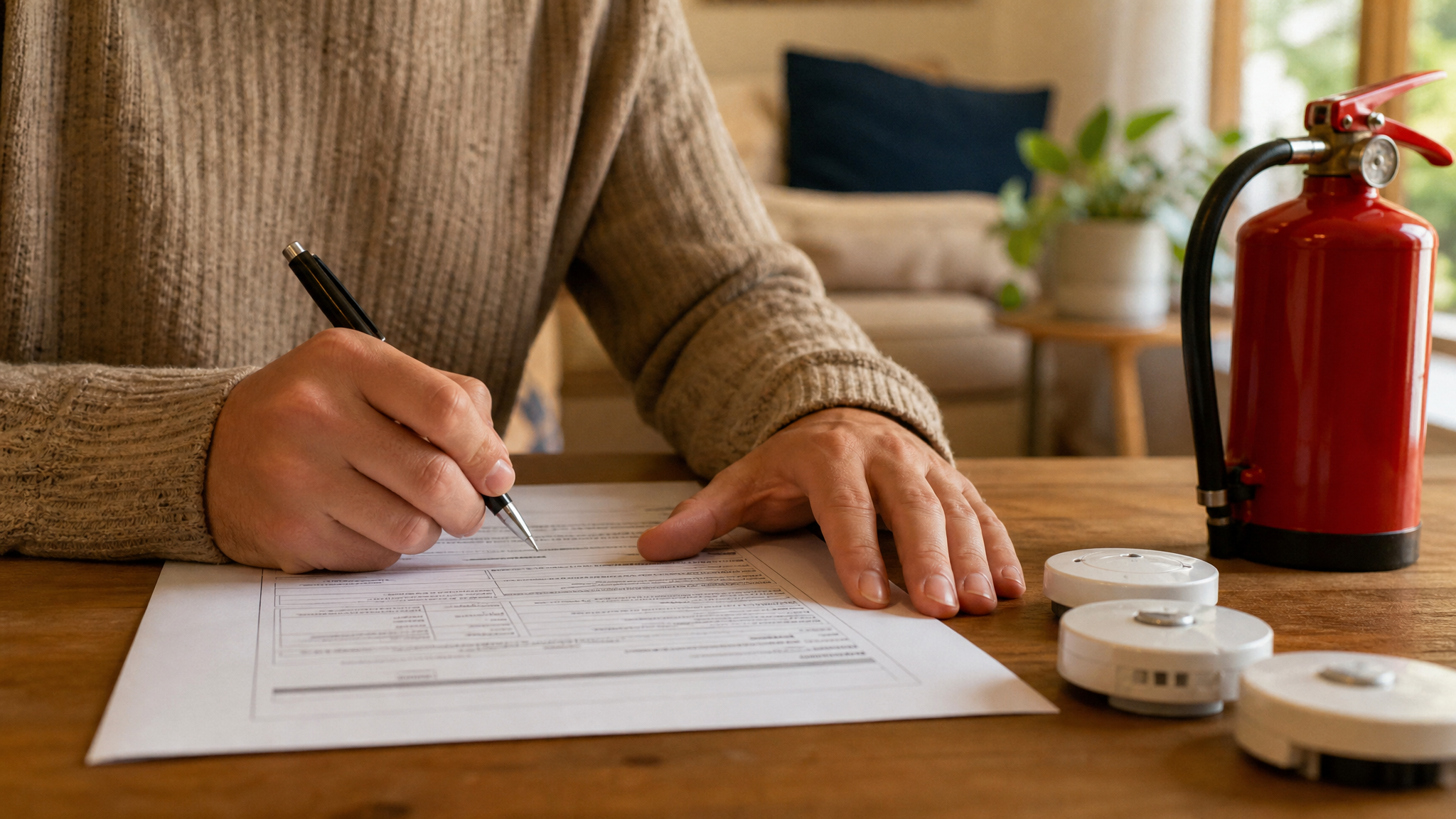
Install working smoke detectors and carbon monoxide detectors in every required location, keep a fire extinguisher in the kitchen, and have a basic first-aid kit visible and stocked. Enable Airbnb's guest identity verification feature in your booking settings — it adds a layer of accountability without meaningfully reducing bookings. Carry a short-term rental insurance policy specifically designed for STRs. Standard homeowner's or landlord policies often exclude commercial activity, leaving you exposed.
6. Reviews and Superhost Strategy
Earning 5-Star Stays
A 4.7 average looks fine until you realize Superhost requires 4.8, and that threshold unlocks better search placement, a trust badge that converts skeptical guests, and access to exclusive promotions. The best airbnb host tips around reviews focus on prevention rather than recovery. Set expectations clearly before arrival — guests who know what they're getting don't feel misled. Send a brief mid-stay message around day two or three asking if everything is going well. Most issues can be fixed quietly in real time rather than becoming a public one-star complaint.
Service Recovery
When something goes wrong — and it will — resolve it fast and offer a fair remedy. A partial refund on a legitimately broken amenity, handled promptly and graciously, almost always results in a positive review anyway. After checkout, send a personal thank-you note and politely ask for a review. Keep the ask short; don't make guests feel pressured. Track your acceptance rate, cancellation rate, and response rate inside the Airbnb dashboard. All three feed directly into Superhost eligibility.
7. Optimize and Scale with Data
KPI Tracking
Once you have a few months of data, start treating your listing like a business with metrics. Occupancy rate tells you how well you're priced relative to demand. Average daily rate (ADR) tells you whether you're capturing revenue when demand is high. RevPAR — revenue per available rental day — combines both into a single performance indicator. Watch your search-to-booking conversion rate inside Airbnb's analytics; a low conversion rate often means your pricing or photos need work even if your search ranking is solid.
Incremental Upgrades
Test one amenity addition at a time and measure whether bookings or reviews improve. A dedicated workspace, blackout curtains, a quality coffee station, or a streaming stick costs relatively little but can flip the decision for remote workers or weekend travelers comparing two similar properties. Adjust minimum stay requirements seasonally — shorter minimums fill gaps during shoulder periods; longer minimums reduce turnover costs during peak weeks. Cross-listing on Vrbo or Booking.com can expand reach, but only once your operations are tight enough to handle channel management without double-bookings.
These top tips for Airbnb hosts aren't about gaming the platform — they're about building a property that genuinely delivers for guests and runs efficiently for you. Start with the fundamentals, track what matters, and improve one thing at a time. That approach compounds quickly.